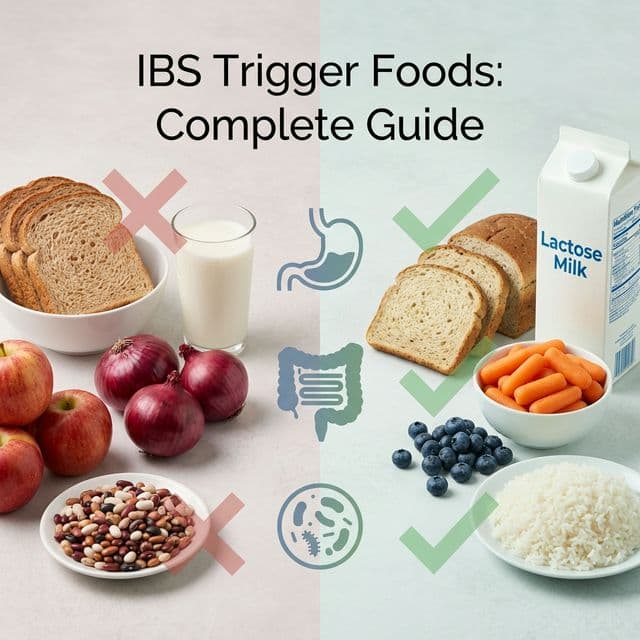
IBS Trigger Foods: Complete Guide to Identifying Your Triggers
Key Takeaways
- IBS triggers are highly individual—what bothers one person may be fine for another
- FODMAPs (fermentable carbohydrates) are the most common IBS triggers, affecting 70-80% of people
- Fructans in wheat are often more problematic than gluten itself for IBS sufferers
- An elimination diet (2-3 weeks) followed by systematic reintroduction identifies personal triggers
- Non-FODMAP triggers include caffeine, alcohol, fatty foods, and stress
IBS (Irritable Bowel Syndrome): A chronic gastrointestinal disorder affecting 10-15% of adults worldwide, characterized by abdominal pain, bloating, and altered bowel habits without structural abnormalities.
Understanding IBS Food Triggers
Not all IBS triggers are created equal. While certain foods are commonly problematic, IBS is highly individualized—your specific triggers may differ significantly from someone else's. This is why systematic identification through an elimination diet is crucial rather than blindly avoiding all "IBS foods."
According to research published in 2025, the low FODMAP diet successfully reduces symptoms in 70-80% of IBS patients, making FODMAPs the most common category of triggers. However, other factors like caffeine, fat content, and even meal timing can also play significant roles.
The 6 FODMAP Categories (Most Common Triggers)
FODMAPs are short-chain carbohydrates that are poorly absorbed in the small intestine, leading to fermentation and gas production in the colon.
1. Fructans (Oligosaccharides)
What they are: Chains of fructose molecules found in wheat and certain vegetables
Why they trigger IBS: Research shows fructans are more likely than gluten to cause IBS symptoms, even in people without celiac disease.
Common sources:
- Grains: Wheat bread, pasta, cereals, crackers, rye, barley
- Vegetables: Onions, garlic, leeks, shallots, scallions (white part)
- Other: Broccoli, Brussels sprouts, cabbage, cauliflower, asparagus
Hidden sources: Check labels for "natural flavors" (may contain onion/garlic), inulin, chicory root, FOS (fructo-oligosaccharides)
2. Lactose (Disaccharide)
What it is: Milk sugar found in dairy products
Why it triggers IBS: Many people with IBS also have lactose intolerance, lacking sufficient lactase enzyme to break down lactose.
Common sources:
- Milk (cow, goat, sheep)
- Soft cheeses (ricotta, cottage cheese, cream cheese)
- Ice cream
- Yogurt (unless containing live cultures)
Safe alternatives: Lactose-free milk/yogurt, hard cheeses (cheddar, Swiss, Parmesan), plant-based milks (almond, coconut, rice)
3. Fructose (Monosaccharide - Excess)
What it is: A simple sugar found in fruits and sweeteners
Why it triggers IBS: When fructose exceeds glucose in a food, it's poorly absorbed and ferments in the gut.
Common sources:
- Fruits: Apples, pears, mango, cherries, watermelon, peaches, plums, apricots
- Sweeteners: Honey, agave nectar, high-fructose corn syrup
- Dried fruits: Raisins, dates, figs
Safe alternatives: Firm bananas, blueberries (1/3 cup), strawberries, oranges, kiwi, pineapple
4. Galacto-oligosaccharides (GOS)
What they are: Chains of galactose molecules found in legumes
Why they trigger IBS: Humans lack the enzyme to break down GOS, leading to bacterial fermentation.
Common sources:
- Beans (black, kidney, pinto, navy)
- Lentils
- Chickpeas
- Soybeans
Tip: Canned legumes (drained and rinsed) have lower FODMAP content than dried; small portions (1/4 cup) may be tolerated.
5. Sorbitol (Polyol)
What it is: A sugar alcohol occurring naturally and used as artificial sweetener
Why it triggers IBS: Draws water into the gut and ferments, causing diarrhea and bloating.
Common sources:
- Fruits: Apples, pears, peaches, plums, cherries, blackberries
- Vegetables: Cauliflower, mushrooms, sweet potato
- Artificial: Sugar-free gum, mints, "diet" products
6. Mannitol (Polyol)
What it is: Another sugar alcohol similar to sorbitol
Common sources:
- Mushrooms
- Cauliflower
- Celery
- Sweet potato
- Sugar-free products
Non-FODMAP Trigger Foods
Not all IBS triggers are FODMAPs. These foods can cause symptoms through different mechanisms:
Caffeine
Why it triggers: Stimulates intestinal contractions, potentially causing diarrhea or urgency
Sources: Coffee, black tea, energy drinks, chocolate
Strategy: Limit to 1 cup/day or switch to decaf; green tea may be better tolerated
Alcohol
Why it triggers: Irritates the gut lining and speeds up digestion
Sources: All alcoholic beverages, especially beer and wine
Strategy: Limit intake; clear spirits may be better tolerated than beer/wine
High-Fat/Fried Foods
Why it triggers: Slows digestion and can cause cramping and diarrhea
Sources: Fast food, fried foods, fatty meats, creamy sauces
Strategy: Choose lean proteins, baked/grilled instead of fried, limit portion sizes
Spicy Foods
Why it triggers: Capsaicin irritates the digestive tract
Sources: Hot peppers, spicy sauces, curry
Strategy: Use mild herbs and spices instead (basil, oregano, thyme)
Processed Foods
Why it triggers: High in additives, preservatives, and hidden FODMAPs
Sources: Packaged snacks, frozen meals, deli meats
Strategy: Read labels carefully; choose whole, unprocessed foods
Insoluble Fiber (in excess)
Why it triggers: Can worsen symptoms in some people with IBS
Sources: Whole grain skins, raw vegetables, bran
Strategy: Focus on soluble fiber (oats, psyllium); peel vegetables
How to Identify YOUR Personal Triggers
The Elimination Diet Approach
Phase 1: Elimination (2-3 Weeks)
Remove all high-FODMAP foods and common triggers from your diet until symptoms improve significantly.
What to eliminate:
- All 6 FODMAP categories (see above)
- Caffeine
- Alcohol
- Fried/fatty foods
- Processed foods
What to eat:
- Lean proteins (chicken, fish, eggs, firm tofu)
- Low FODMAP vegetables (carrots, spinach, zucchini, bell peppers)
- Low FODMAP fruits (firm banana, blueberries, strawberries)
- Gluten-free grains (rice, quinoa, oats)
- Lactose-free dairy or plant milks
Phase 2: Reintroduction (6-10 Weeks)
Systematically test one FODMAP group at a time using the 3-day protocol:
- Day 1: Small portion of test food
- Day 2: Medium portion (if Day 1 went well)
- Day 3: Large portion (if Day 2 went well)
- Washout: Wait 3 days before testing next FODMAP group
Phase 3: Personalization (Ongoing)
Create your customized diet based on reintroduction results, including tolerated foods while avoiding confirmed triggers.
Food and Symptom Diary: Essential Tool
What to Track Daily
Foods:
- Everything you eat and drink
- Portion sizes
- Meal times
Symptoms:
- Type (bloating, pain, diarrhea, constipation, gas)
- Severity (1-10 scale)
- Timing (when symptoms occurred)
Other Factors:
- Stress levels
- Sleep quality
- Exercise
- Menstrual cycle (for women)
Pattern Recognition
After 2-3 weeks of tracking, look for:
- Foods that consistently precede symptoms
- Time lag between eating and symptoms (usually 2-24 hours)
- Cumulative effects (FODMAP stacking)
- Non-food triggers (stress, lack of sleep)
Common Trigger Foods by Category
High-Risk Triggers (Avoid During Elimination)
| Category | High FODMAP/Trigger Foods |
|---|---|
| Fruits | Apples, pears, mango, watermelon, cherries, peaches, dried fruits |
| Vegetables | Onions, garlic, broccoli, cauliflower, Brussels sprouts, asparagus, mushrooms |
| Grains | Wheat bread/pasta, rye, barley, regular cereals |
| Dairy | Milk, soft cheeses, ice cream, yogurt (regular) |
| Legumes | Beans, lentils, chickpeas, soybeans |
| Sweeteners | Honey, agave, high-fructose corn syrup, sorbitol, mannitol, xylitol |
| Beverages | Coffee, alcohol, soda, fruit juices |
| Processed | Fast food, fried foods, packaged snacks with additives |
Low-Risk Foods (Generally Safe)
| Category | Low FODMAP Foods |
|---|---|
| Fruits | Firm banana, blueberries (1/3 cup), strawberries, oranges, kiwi, pineapple |
| Vegetables | Carrots, spinach, zucchini, bell peppers, tomatoes, lettuce, cucumber |
| Grains | Rice, quinoa, gluten-free bread, oats (1/3 cup), sourdough spelt |
| Proteins | Chicken, fish, eggs, firm tofu, lean beef, pork |
| Dairy | Lactose-free milk/yogurt, hard cheeses, almond milk, coconut milk |
| Fats | Olive oil, coconut oil, butter (small amounts) |
Hidden Trigger Sources to Watch
Sneaky FODMAPs in Processed Foods
Inulin/Chicory Root: Added to "high-fiber" products, protein bars, cereals
Natural Flavors: May contain onion or garlic powder
High-Fructose Corn Syrup: In sodas, condiments, baked goods
Oligofructose/FOS: Added for "gut health" but high FODMAP
Maltitol/Sorbitol: In sugar-free candies, gum, diet products
Restaurant Pitfalls
- Sauces and dressings (often contain onion/garlic)
- Marinades and stocks (FODMAP-rich bases)
- Breaded items (wheat coating)
- "Gluten-free" items (may still contain high-FODMAP ingredients)
Strategy: Ask for plain grilled proteins, steamed vegetables, oil and vinegar dressing on the side.
Myths vs. Facts About IBS Triggers
❌ Myth: "Gluten causes IBS"
✅ Fact: Fructans in wheat are usually the culprit, not gluten itself. Sourdough bread (fermented) is often tolerated.
❌ Myth: "All dairy is bad for IBS"
✅ Fact: Only lactose-containing dairy triggers symptoms. Hard cheeses and lactose-free products are fine.
❌ Myth: "Healthy foods like beans and broccoli can't be triggers"
✅ Fact: Nutritious foods can still be high FODMAP. It's about finding what works for YOUR gut.
❌ Myth: "Once a trigger, always a trigger"
✅ Fact: Tolerance can change over time. Retest foods every 3-6 months.
❌ Myth: "I need to avoid all FODMAPs forever"
✅ Fact: The low FODMAP diet is temporary (2-3 weeks). Most people can reintroduce many foods.
When to Seek Professional Help
Consult a gastroenterologist or registered dietitian if:
- Symptoms don't improve after 3 weeks of elimination
- You're losing weight unintentionally
- You have severe pain or blood in stool
- You're struggling to maintain nutritional balance
- You need guidance on systematic reintroduction
A FODMAP-trained dietitian can:
- Ensure nutritional adequacy during elimination
- Guide systematic reintroduction testing
- Help identify hidden FODMAP sources
- Create a personalized long-term eating plan
How GutWise Simplifies Trigger Identification
Manual food and symptom tracking is tedious and error-prone. GutWise automates the entire process:
Smart Tracking:
- Log meals with barcode scanning or photo recognition
- Automatic FODMAP content analysis
- Symptom logging with severity scales
AI Correlation:
- Identifies patterns between foods and symptoms
- Accounts for time lag (2-24 hours)
- Detects FODMAP stacking effects
Automated Reintroduction:
- Guides you through the 3-day testing protocol
- Enforces washout periods automatically
- Builds your personalized safe foods list
Restaurant Safety:
- Scans menus for FODMAP triggers
- Suggests safe modifications
- Tracks dining-out experiences
Start your free 14-day trial and let GutWise identify your triggers automatically.
Related GutWise Health Resources
- Complete Low FODMAP Food List 2026 - Comprehensive serving size guide
- FODMAP Reintroduction Guide - Step-by-step testing protocol
- 25 Low FODMAP Breakfast Ideas - Trigger-free morning meals
- Take Our Free Assessment - Get personalized FODMAP guidance
The Bottom Line
IBS trigger foods are highly individual, but FODMAPs (especially fructans, lactose, and fructose) are the most common culprits. The key to long-term symptom management is identifying YOUR specific triggers through systematic elimination and reintroduction—not blindly avoiding all "IBS foods" forever.
Remember:
- Start with a 2-3 week elimination phase
- Keep a detailed food and symptom diary
- Reintroduce foods systematically, one at a time
- Work with a FODMAP-trained dietitian for best results
- Use tools like GutWise to automate tracking and correlation
With patience and systematic testing, most people can identify their triggers and return to eating a varied, enjoyable diet while keeping symptoms under control.
Sources:
- Cleveland Clinic. IBS trigger foods and dietary management.
- Healthline. Low FODMAP diet and elimination strategies.
- Johns Hopkins Medicine. IBS food triggers.
- Monash University. FODMAP research and reintroduction protocols.
- Verywell Health. Common IBS dietary triggers.